

Supportful’s 2024 report highlights a young, AI-driven, and highly remote Lebanese tech workforce, with strong adoption of modern stacks like React and Python. Career growth, flexibility, and competitive pa
In July 2024, Supportful conducted a survey to better understand the local tech talent landscape in Lebanon. We believe this was the first comprehensive attempt at understanding the dynamics of Lebanon's growing tech talent scene.
I had previously shared some highlights from the report, and I want to elaborate more on some of the findings in this article. You can download the full 2024 Lebanese Tech Scene Report which tries to answer questions about Lebanon's tech talent such as:
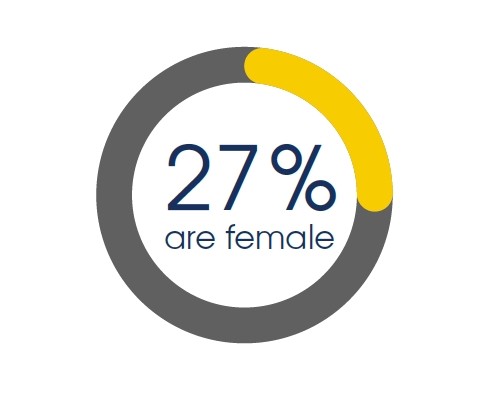
Women make up approximately 27% of the survey respondents. If this figure holds as the female percentage of Lebanon's software engineering workforce, it would be significant compared to the global female average of 16% found in a previous LinkedIn study, and the US average of 22% per a study by Zippia.
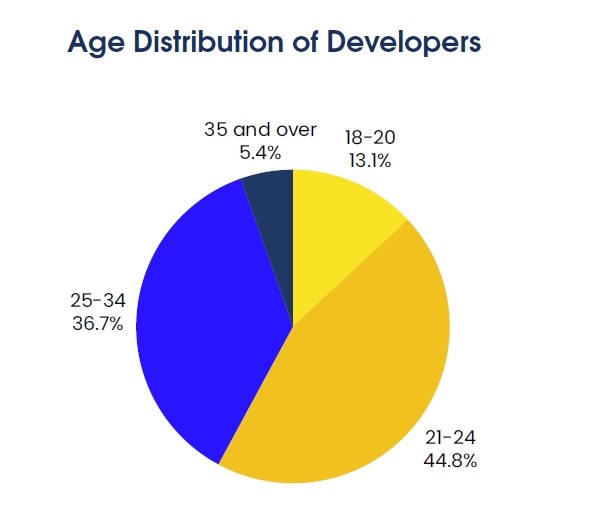
In Lebanon, 44.8% of software engineers fall within the 21-24 age group, indicating a predominantly young workforce. Globally, data from the 2023 Stack Overflow Developer Survey reveal that around 36% of developers worldwide are aged 20-29, reflecting a comparable yet slightly older trend. When combined with the 36.7% who belong to the 25-34 age group, the segment aged between 21 and 34 years account for almost 82% of the software engineering workforce.
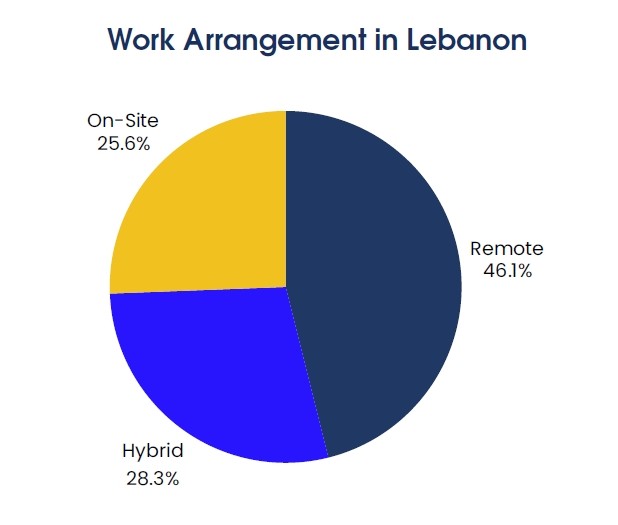
46.1% of Lebanese software engineers work remotely, 28.3% work in a hybrid arrangement, and 25.6% go to the office every day. This is an impressive figure for two main reasons:
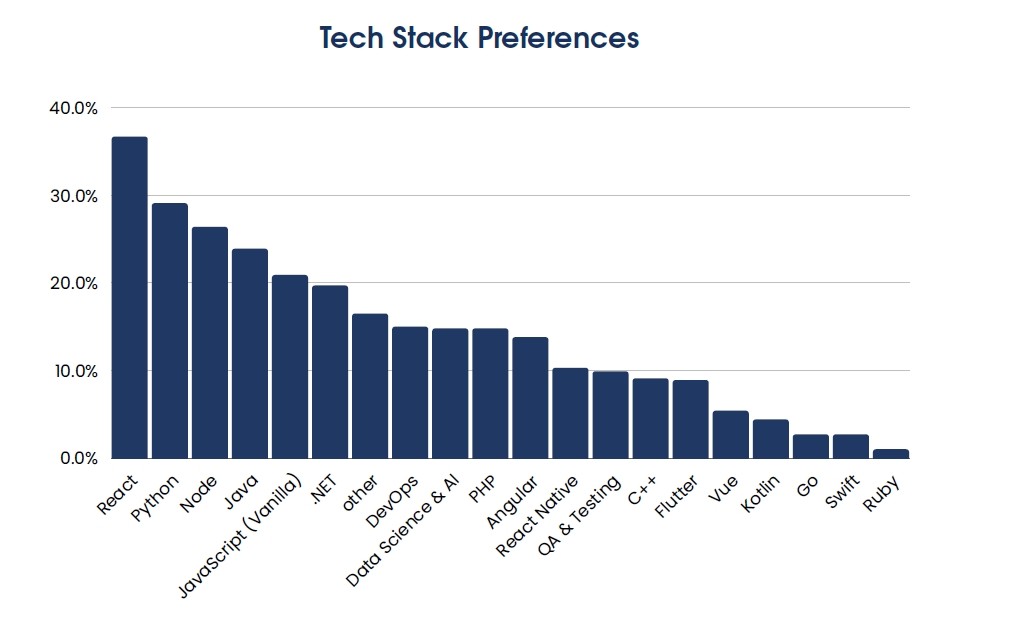
React stands out as the most used technology framework among software engineers in Lebanon with 36.7% of respondents stating they currently use it. Python is in the second position with 29.1% of respondents currently using it followed by Node (26.4%) and Java (23.9%).
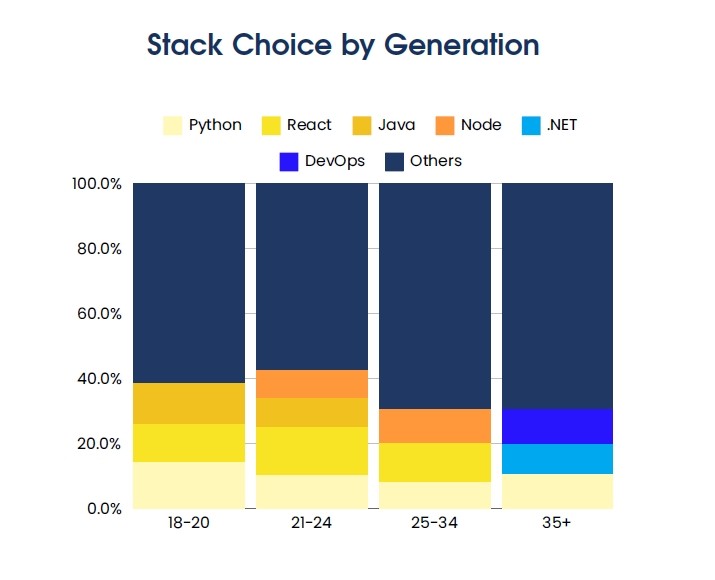
Python is consistently in the top 3 languages used by software engineers of all age groups. React ranks first or second among those aged 34 and younger and disappears from the top 3 in the 35+ age group. Java is widely used in the younger groups (18-24), probably linked to a large part of this group being undergraduate and graduate students. Node is present in force in the 21-34 age range but not in the 35+ group where DevOps and .NET make their appearance in the top 3 languages.
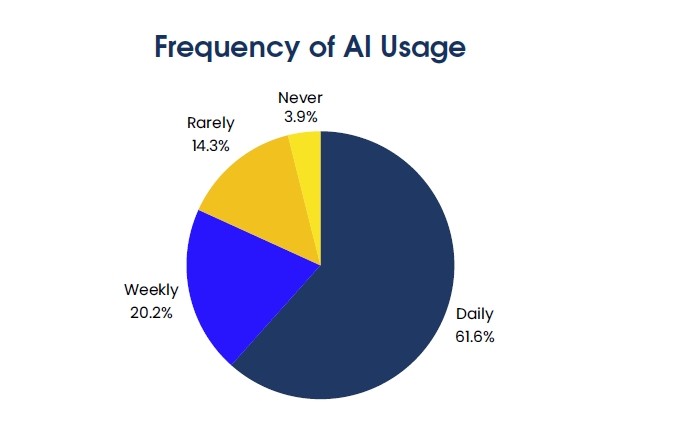
61.6% of software engineers in Lebanon use AI daily, 20.2% use it weekly, 14.3% rarely use it, and only 3.9% never use it. This means that 81.8% use AI regularly which indicates a massive adoption of AI technologies by Lebanese developers.
Software engineers who work with data science, Kotlin, and PHP technologies heavily rely on AI in their daily tasks, while those utilizing .NET, C++, or working with QA & Testing use AI the least.
Most Lebanese software engineers positively rate their life-work balance, with 58.6% of them saying it's either good or excellent and only 12.6% saying it's poor or very poor. In a country in crisis, this figure could reflect the "eternal Lebanese optimism" or it could mean that developers enjoy a steady income in hard currency - well above the average salary of the general population.
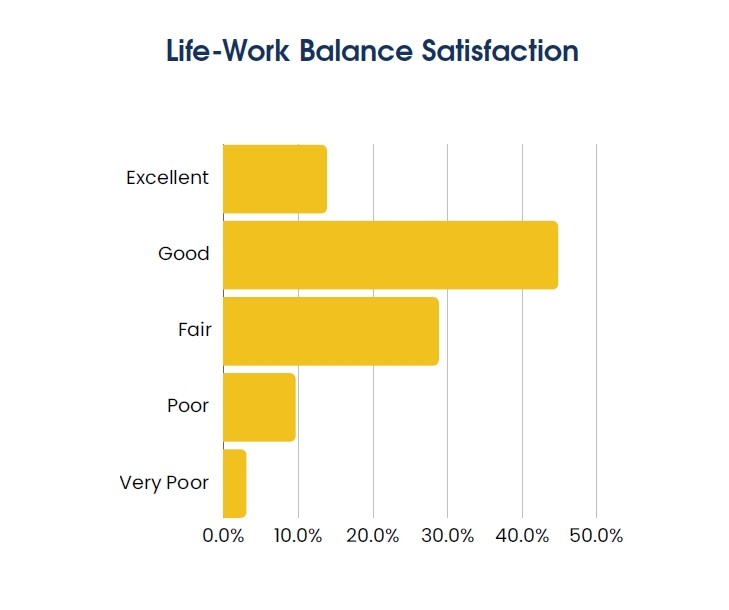
A disappointing figure is the percentage of women engineers experiencing a poor or very poor life-work balance, at 16.7%, well above their male counterparts (11.1%).
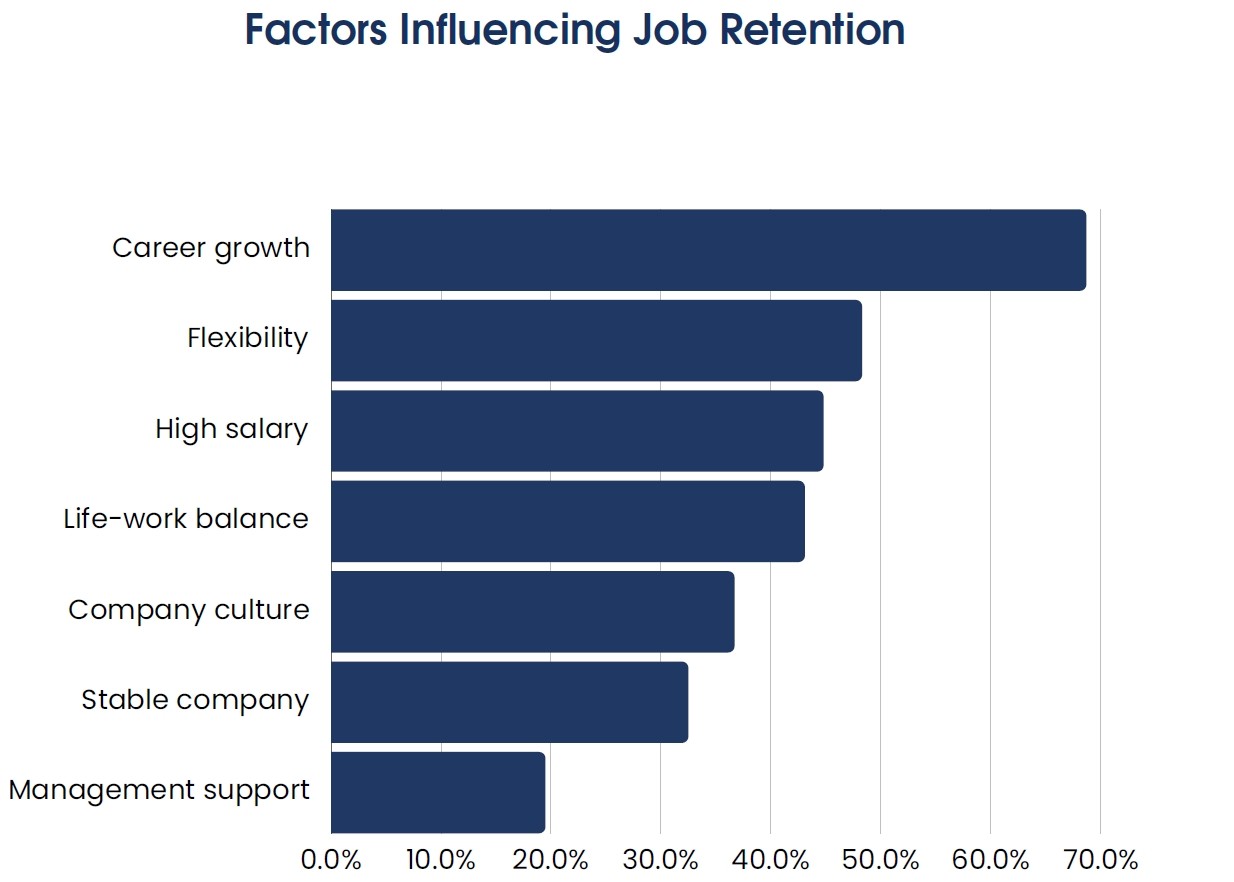
68.7% of respondents valued career advancement as their main reason for staying in their current job, followed by flexibility (48.3%), a high salary (44.8%), and a good life-work balance (43.1%). These findings indicate that talent retention is closely related to a clear career path, some sort of flexibility (location, hours, leaves, etc.), and a good compensation. The knowledge worker mindset seems to have evolved in Lebanon from the days where pay was the most attractive element when looking for new opportunities.
Please share any comments on the findings or tell me what topics you would like to see covered in the 2025 report. You can also download the full 2024 Lebanese Tech Scene Report.
Fadi Boulos is the founder of Supportful, a software engineering consulting firm based out of Lebanon. He enables startups in the US and Europe to augment their teams with remote engineers from Lebanon, helping reduce the brain drain in the country and preserve the human capital of its small communities. Fadi has 20 years of experience working in the tech space in the UK, France, and Lebanon, and holds a Ph.D. in Computer Science from the University of Nantes, France.




Book a call and get matched with engineers in 24–72h.