


TeamOps is a modern, performance-driven approach that improves productivity through shared knowledge, fast decision-making, and async, flexible work. By focusing on clear documentation, team autonomy, and measurable outcomes, it helps organizations operate more efficiently and scale effectively.
A few months ago, I took the TeamOps Foundations course on the GitLab University website. I was impressed! TeamOps reflected exactly how I see companies functioning and growing. So what is TeamOps, and why should you care?
TeamOps is defined by its creators as a "performance-centric operational approach designed to optimize team dynamics, streamline decision-making, and enhance productivity within organizations." In other words, it's a modern way to efficiently run companies and teams. Created and practiced by GitLab, TeamOps's main objectives are:
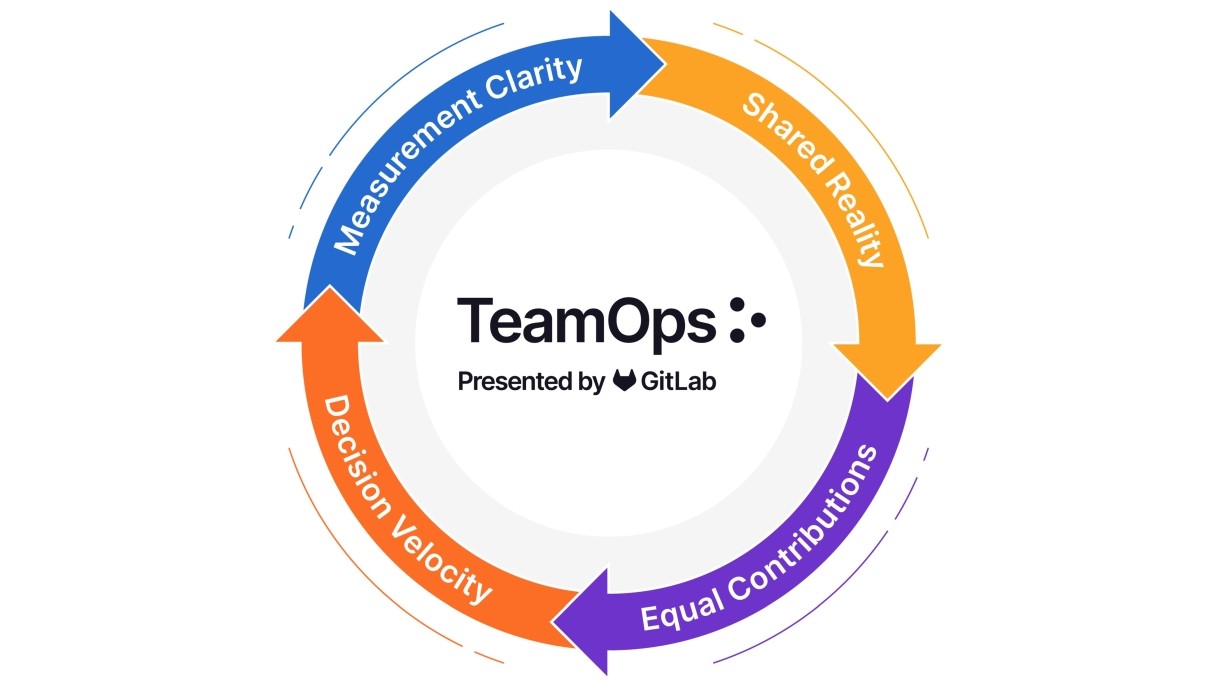
The TeamOps framework lies on four pillars: shared reality, equal contributions, decision velocity, and measurement clarity. Here's an overview of each of these pillars.
TeamOps optimizes for the speed of knowledge retrieval, not transfer. All teams should be informed by the same reality, usually shared in an easy-to-use handbook. This handbook serves as a Single Source of Truth (SSoT), and includes information related to the company, the available tools, and how to work together.
Some notes about the handbook:
Everyone at the organization can equally consume and contribute information, regardless of level and function. There is however a Directly Responsible Individual (DRI) for each project or decision. The DRI is solely responsible for its success or failure.
Meetings are only necessary for decisions and tasks that are best made with immediate feedback and collaboration. Most work should happen outside of meetings. A well-managed meeting includes a mandatory agenda and thorough note-taking in a live document.
One concept I particularly liked at GitLab is "short toes". People collaborating together should feel comfortable with feedback and suggestions. They shouldn't be offended that their colleague is "stepping on their toes" by contributing to the discussion. This policy aims at creating a psychologically safe environment where everyone can pitch in.

One of TeamOps's objectives is to increase the quality and quantity of decisions a team can make. Here are some steps that will help achieve this objective:
TeamOps is all about measuring the output instead of the input. It doesn't matter where and when you're working - as long as the job is done.
An interesting concept for accurate measurement is the definition of done. For each iteration, teams should define its conclusion and the beginning of the next iteration.
The measurement clarity tenant considers the following:
As Annie Dean from Atlassian says: "The office is not where you do work. The internet is." TeamOps is an approach valid for both on-site and distributed companies. Here's a quick guide to start implementing it:
At Supportful, we've started implementing TeamOps. Let me know if you're considering TeamOps for your company or share your learnings if you've already implemented it.
Fadi Boulos is the founder of Supportful, a software engineering consulting firm based out of Lebanon. He enables startups in the US and Europe to augment their teams with remote engineers from Lebanon, helping reduce the brain drain in the country and preserve the human capital of its small communities. Fadi has 20 years of experience working in the tech space in the UK, France, and Lebanon, and holds a Ph.D. in Computer Science from the University of Nantes, France.




Book a call and get matched with engineers in 24–72h.