



Wired to Click: The Psychology Behind Great UX
After more than ten years in tech, I've noticed that the people who are best at User eXperience (UX) often don't have it in their job title. They're developers and founders who care about the person using the product. That care is the starting point; the rest is understanding how people think and feel.
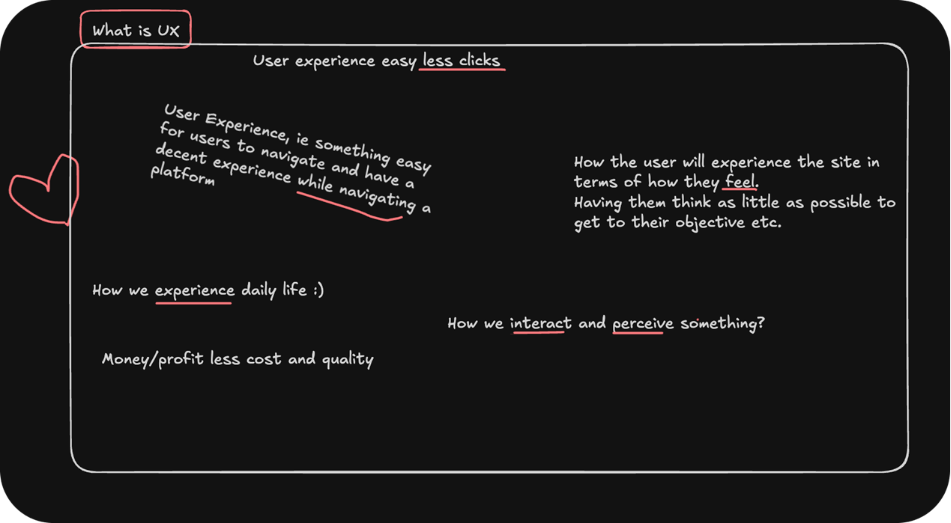
What is UX?
“We like to think reason and logic drive us, but it's our emotions that do.”
David Hume, Scottish philosopher and historian
Products are no different, which is why the word I'd use for UX is feel. Ask people what it means and you'll hear "easy," "fewer clicks," "less frustration." Each of those describes how a product feels to use. The goal is to make people think as little as possible to get what they came for, or as Steve Krug put it in a book title, Don't Make Me Think.
When something goes wrong, users blame themselves, but Don Norman, who coined the term user experience, would call most of those mistakes design errors. And it's not only websites and apps; hospitals, malls and parks are designed experiences too. A colleague once stood in front of four park trash cans whose sign listed what didn't belong in big letters and what did in small print, and nobody could tell what went where.
In a product, that confusion costs money, which is what stakeholders watch. They think in profit while designers think in quality and users, and that's where the two clash most. I bridge it by pitching each design decision as lower cost or higher quality, with the time and money it saves.
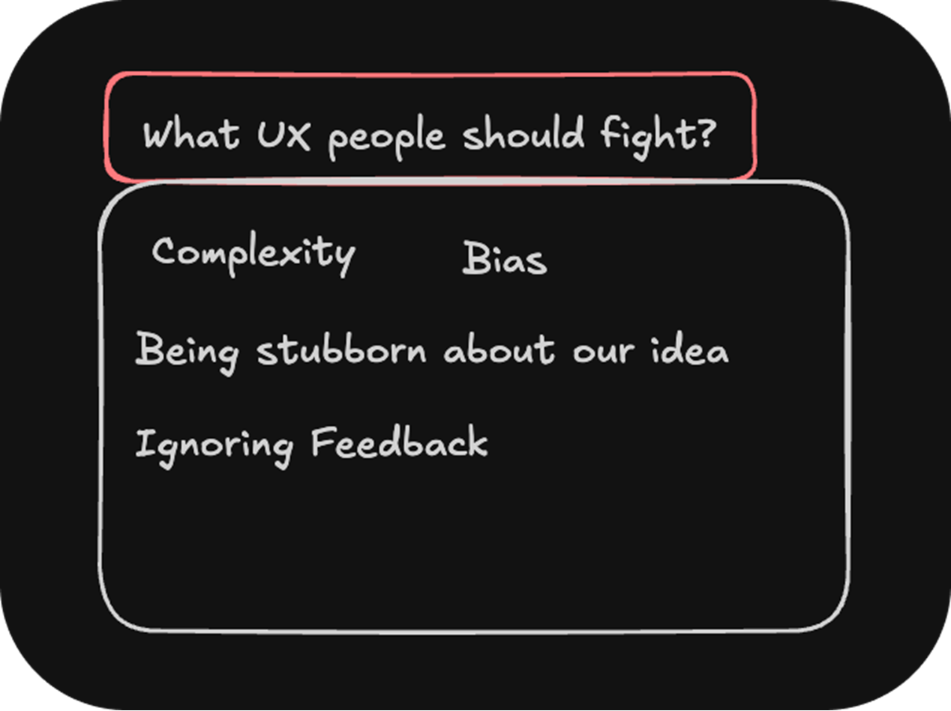
What UX people should fight
Complexity, stubbornness about our own ideas, and ignoring feedback all make products worse. The one I'd put at the top of the list is bias.
Every project starts with assumptions, so it's easy to design for ourselves and fall for a solution before testing it. Testing with real users fixes that. Analytics shows what people do; talking to them shows why, which usually teaches you more (sometimes, outright surprises you).
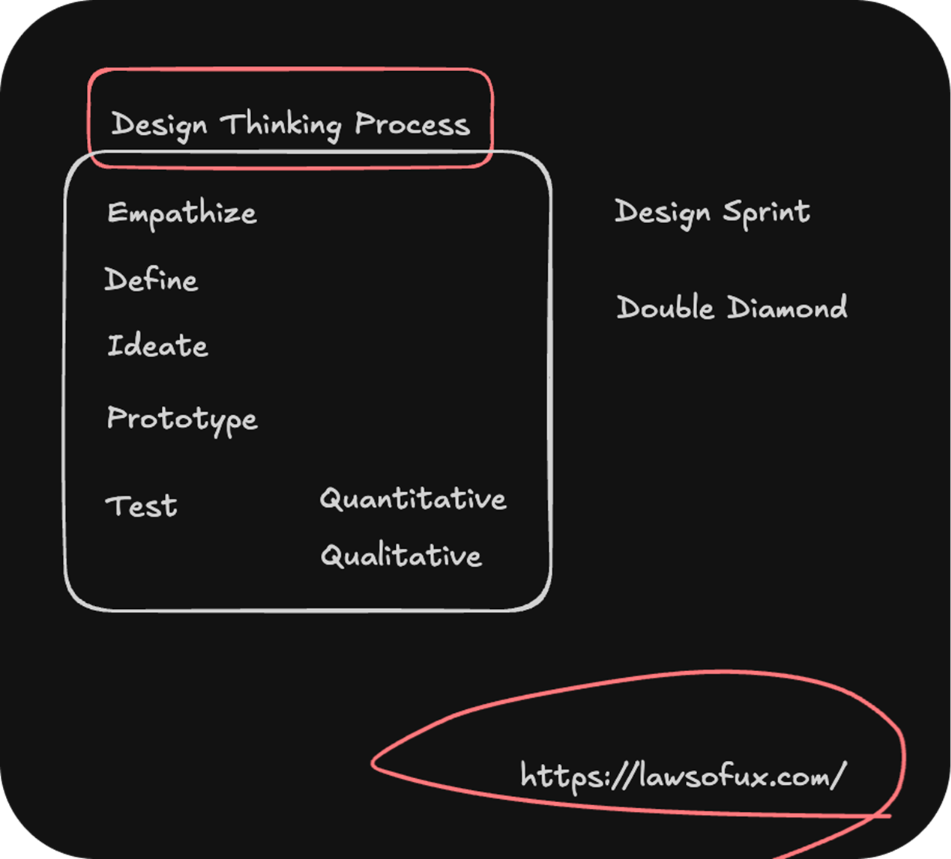
The design thinking process
Design thinking runs Empathize → Define → Ideate → Prototype → Test. Engineers, me included, tend to skip Define: give us a problem and we'll hand you a solution before we understand it. Designers learn to hold back, and the Double Diamond shows how: go wide on the problem (divergent thinking), narrow it down (convergent thinking), then go wide on solutions and pick one. Done properly, this took weeks, which is why Google built the Design Sprint to fit it into five days.
How AI changed my process (from weeks to hours)
Two years ago I designed every screen by hand in Figma. Now the components come from shadcn and Tailwind (this depends on the tech stack), the design rules live in a CLAUDE.md file, and when I like a pattern elsewhere I screenshot it and Claude builds it in our design system. Building has become the cheap part; understanding the client and finding good inspiration is where the time goes. Sprints shrank too, from two weeks (or 5 days, Google's way) to hours, as long as you define the problem yourself and give the AI small chunks of work.
One of my clients builds AI models for causal analysis, a field I had to learn from scratch, so I started with their competitors. That's how we found a tool on GitHub that automates causal discovery, a data-organizing step the client's team was doing by hand, and now we're building it into our app. On the same project I built a gamified onboarding checklist in about an hour, and the developers approved the PR the same day (which is crazy!).
Wired to scroll
Most of the apps on your phone use operant conditioning. Duolingo rewards your daily streak (positive reinforcement) and takes it away when you skip a day (negative punishment). Reels add randomness, which the brain finds hard to put down for the same reason people gamble. This blog post could just as well have been called Wired to Scroll.
Once you know these patterns, you get to choose how to use them. Psychologists recommend leaning on positive reinforcement and keeping punishment to a minimum, which is why the onboarding checklist I built ticks off each step as you finish it (and doesn't punish you lol). With AI, building it was the quick part. Deciding how it should make people feel, and checking that against real users instead of our own assumptions, is still the designer's job.
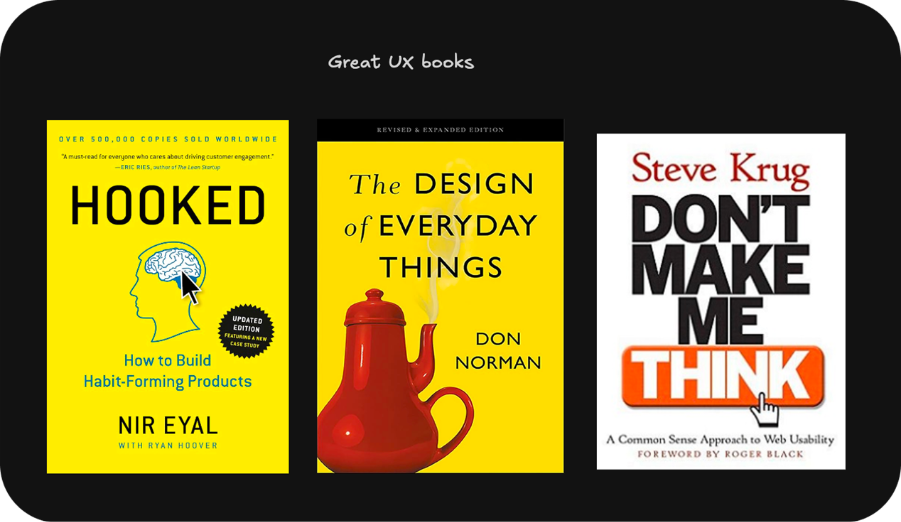
Further reading
Must-read books for UX:
For the principles themselves, like Hick's law and cognitive load, see lawsofux.com.




Book a call and get matched with engineers in 24–72h.